
Blog Details

SEO vs Google Ads for Lead Generation: Which Strategy Fits Your Business?
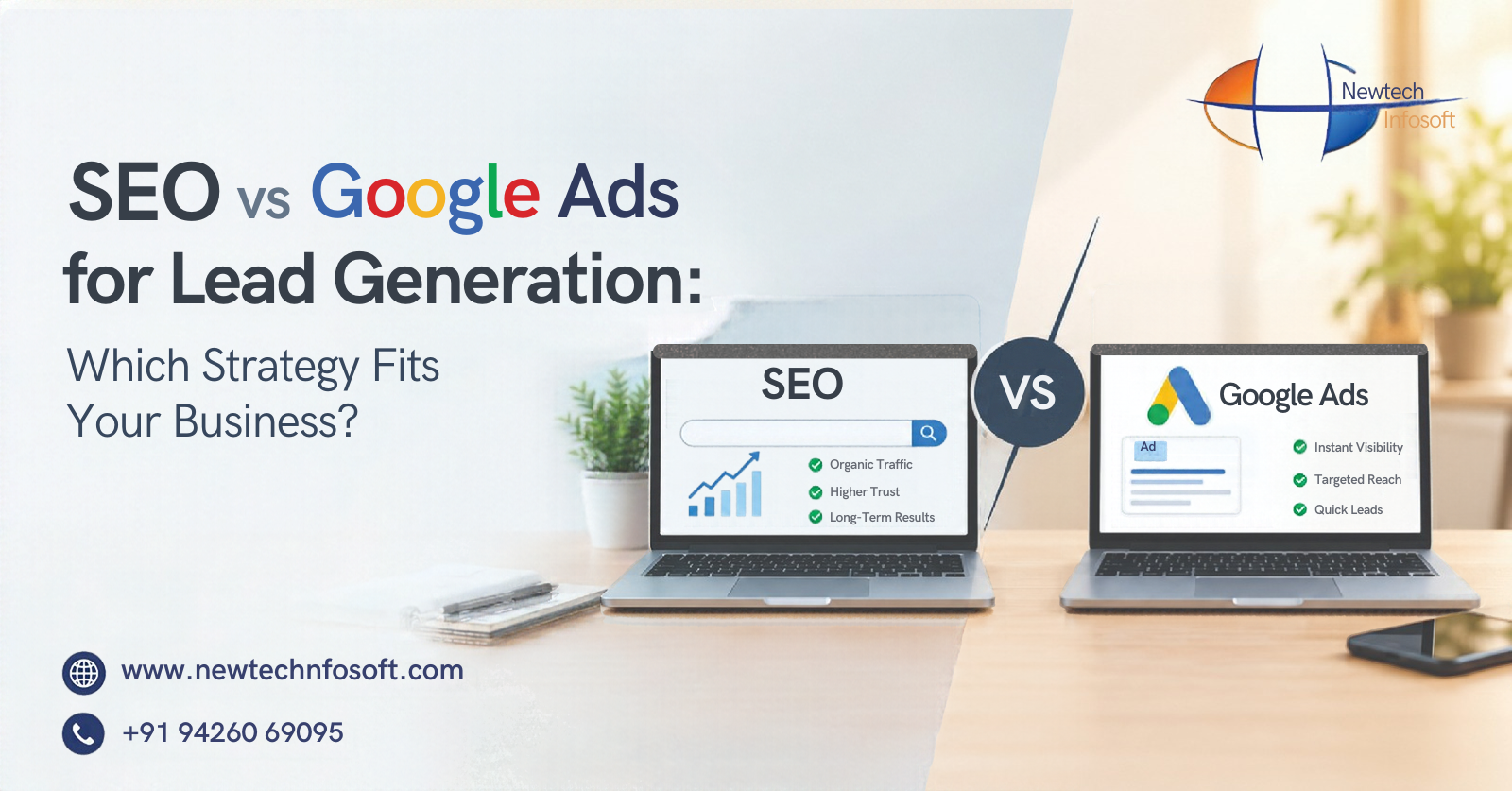
Generating quality leads is essential for business growth, but choosing the right digital marketing strategy can be challenging. Some businesses need enquiries quickly, while others want to build long-term visibility and attract customers consistently.
Search Engine Optimization (SEO) and Google Ads are two popular ways to reach potential customers online. Both can support lead generation, but they differ in cost, timing, and long-term value.
Understanding SEO vs Google Ads for lead generation helps businesses choose the right approach according to their goals, budget, and competition.
What Is SEO and How Does It Generate Leads?
Search Engine Optimization (SEO) improves a website’s visibility in organic search results. It involves keyword research, content optimization, technical improvements, and link building to help search engines understand relevant website pages.
For example, a company offering business software might optimize its website for searches such as “employee management software” or “business management solutions.” When potential customers search for these terms, optimized pages have an opportunity to attract relevant visitors.
Benefits of SEO
- Long-term visibility: Well-optimized pages can attract organic visitors over time.
- Builds credibility: Helpful content and informative service pages can establish trust.
- Cost efficiency: Organic search does not charge businesses for every click, although SEO requires ongoing investment.
- Relevant traffic: Targeting specific keywords helps attract people interested in particular products or services.
Limitations of SEO
SEO takes time to produce meaningful results, especially in competitive industries. Businesses need consistent optimization, useful content, and regular performance monitoring. Rankings are not guaranteed, and results can change as competition evolves.
SEO is particularly suitable for businesses that want sustainable online visibility rather than relying entirely on immediate traffic.
What Are Google Ads and How Do They Generate Leads?
Google Ads is an advertising platform that allows businesses to display paid advertisements to people searching for relevant products or services.
For example, a digital marketing company can run campaigns targeting searches such as “SEO services for small businesses.” Interested users can click an advertisement, visit the website, and submit an enquiry.
Benefits of Google Ads
- Faster visibility: Campaigns can start attracting traffic after approval and launch.
- Budget control: Businesses can manage campaign spending and bids.
- Targeted advertising: Campaigns can focus on relevant keywords and geographic locations.
- Measurable results: Conversion tracking helps evaluate enquiries, calls, and cost per lead.
- Flexible testing: Businesses can test advertisements and landing pages to identify effective combinations.
Limitations of Google Ads
Google Ads requires ongoing advertising expenditure. In cost-per-click campaigns, businesses pay for clicks, but those clicks do not guarantee qualified leads or sales.
Poor keyword selection, irrelevant traffic, and weak landing pages can waste the advertising budget. Campaigns require regular monitoring to maintain performance.
SEO vs Google Ads: Key Differences
| Factor | SEO | Google Ads |
| Visibility | Organic search results | Paid advertisements |
| Time to results | Usually takes time | Can generate traffic quickly |
| Cost | Optimization and maintenance | Advertising and management costs |
| Long-term potential | Sustained organic traffic | Depends on active campaigns |
| Budget control | Flexible investment | Adjustable campaign budgets |
| Best suited for | Long-term growth | Faster visibility |
Both strategies can generate leads, but neither guarantees conversions. Results depend on search intent, competition, website quality, and how effectively a business handles enquiries.
When Should Your Business Choose SEO?
SEO may be the better choice if your business wants to build lasting visibility and attract potential customers over time.
Consider prioritizing SEO when:
- You want to improve organic search rankings.
- Your customers regularly search online for your services.
- You can invest in website improvements and useful content.
- You want to attract visitors through multiple relevant keywords.
- Your business has long-term growth objectives.
For instance, a software company can publish helpful guides, optimize product pages, and answer common customer questions. These resources may attract people researching solutions and help them understand the company’s offerings.
A well-optimized website should also make it easy for visitors to explore services, understand benefits, and submit enquiries.
When Should Your Business Choose Google Ads?
Google Ads may be more suitable when your business needs faster visibility or wants to test demand for a product or service.
- You need enquiries within a shorter timeframe.
- You are launching a new service.
- Your website has limited organic visibility.
- You want to test high-intent keywords.
- You have a defined advertising budget.
For example, a local service provider can target potential customers searching for specific services in selected locations. This helps the business reach relevant prospects without waiting for organic rankings to improve.
Before launching a campaign, ensure that your landing page explains the offer clearly, demonstrates credibility, and provides an easy way to contact your business.
Can SEO and Google Ads Work Together?
Yes. Combining SEO and Google Ads can help businesses balance immediate opportunities with long-term growth.
Each channel can support a different objective.
Use Google Ads for quicker visibility. Paid campaigns can attract relevant visitors while organic rankings develop.
Invest in SEO for sustainable traffic. Optimize service pages, improve website performance, and publish content that answers customer questions.
Use advertising insights to guide SEO. Search terms and conversion data from paid campaigns can help identify valuable keywords for organic content.
Improve landing pages. Clear messaging, relevant information, and simple enquiry forms can support conversions from both channels.
Measure business outcomes. Track qualified leads, conversion rates, cost per lead, and sales rather than focusing only on clicks.
Businesses that need professional guidance can explore Newtech Infosoft’s digital marketing services to evaluate suitable strategies for their online growth objectives.
How to Choose the Right Strategy for Your Business
Before investing in SEO or Google Ads, consider these five factors.
Business goals: Decide whether you need immediate enquiries, long-term visibility, or both.
Budget: SEO requires investment in optimization and content, while Google Ads involves advertising expenditure. Choose an approach that fits your available resources.
Competition: Research competitors’ organic rankings and advertising activity to understand your market.
Website readiness: Ensure your website communicates your services clearly and provides straightforward contact options.
Lead quality: Evaluate whether enquiries come from relevant prospects who are likely to become customers.
For example, a campaign generating 20 qualified enquiries may be more valuable than one producing 100 irrelevant enquiries. The objective is to generate business opportunities, not simply increase website traffic.
Conclusion
There is no universal winner in the SEO vs Google Ads comparison. The right strategy depends on your budget, competition, business goals, and timeline.
SEO helps build long-term organic visibility, while Google Ads can deliver faster access to relevant searchers. Combining both can support immediate lead generation while developing sustainable growth.
Newtech Infosoft helps businesses explore digital marketing solutions aligned with their objectives. By focusing on relevant traffic, effective landing pages, and measurable conversions, businesses can make informed marketing decisions and work toward generating more qualified leads
Frequently Asked Questions
1 Which is better for lead generation: SEO or Google Ads?
SEO is suitable for long-term organic visibility, while Google Ads can generate traffic more quickly. The best option depends on your budget, business goals, and how soon you need leads
2 How long does SEO take to generate leads?
SEO may take several months to produce meaningful results. The timeline depends on website authority, competition, keyword difficulty, and the quality of optimization.
3 Can Google Ads generate leads immediately?
Google Ads can start attracting visitors soon after a campaign is approved and launched. However, generating qualified leads depends on targeting, ad quality, landing pages, and conversion tracking.
4 Is SEO cheaper than Google Ads?
SEO does not charge for each organic click, but it requires investment in content, optimization, and maintenance. Google Ads involves advertising costs, which can increase with clicks and competition.
5 Can I use SEO and Google Ads together?
Yes. Businesses can use Google Ads to pursue immediate opportunities while investing in SEO for long-term organic growth. Combining both strategies can diversify lead-generation efforts.
6 How can Newtech Infosoft help with lead generation?
Newtech Infosoft offers digital marketing services to help businesses improve their online visibility and reach relevant audiences. Businesses can explore suitable strategies based on their marketing goals and growth requirements.